
SCANLAN FAMILY DENTISTRY | DENTAL CARE IN RALEIGH
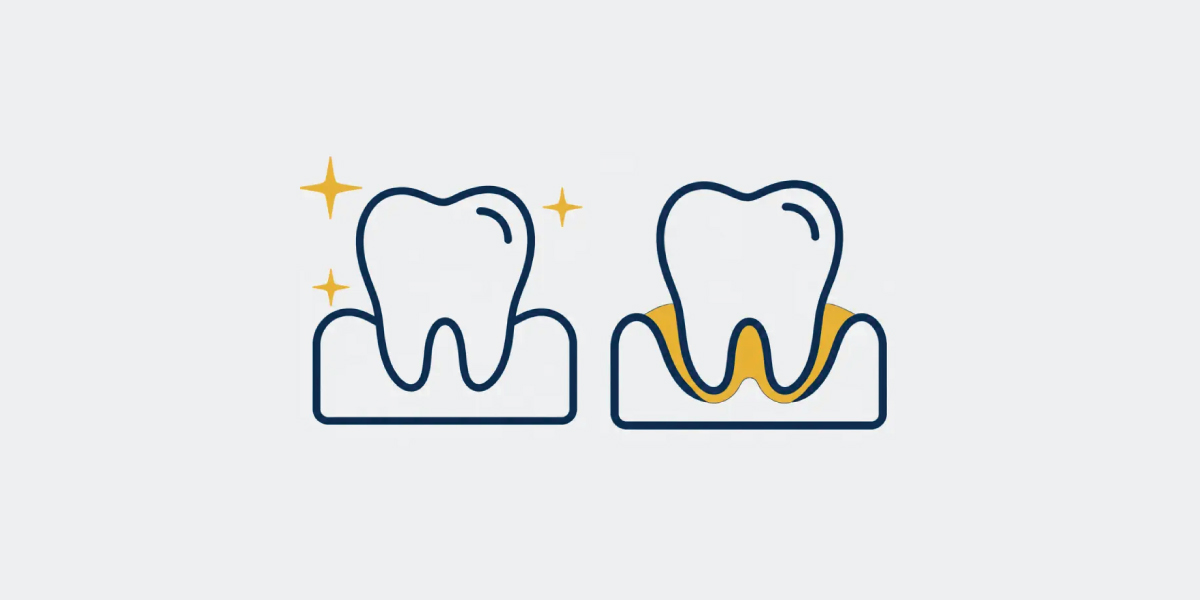
Why routine preventive cleaning and scaling and root planing serve different purposes
Opening summary: A regular cleaning and a deep cleaning are not two versions of the same appointment. A routine cleaning helps us maintain teeth and gums that are generally healthy. A deep cleaning, formally called scaling and root planing, treats deposits below the gumline when periodontal disease is present. If we recommend one, we will show you the measurements and X-rays that led to that recommendation, explain what they mean in plain language, and make sure you have time to ask questions.
Five Quick Questions
Can I choose a regular cleaning instead of a deep cleaning?
If periodontal disease is present, a regular cleaning cannot safely substitute for treatment below the gumline. We will show you the findings and explain why the recommendation fits your gums before you decide how to proceed.
Is a deep cleaning the same as a routine cleaning done longer?
No. Scaling and root planing treats affected root surfaces below the gumline. It is not a routine cleaning that simply takes longer.
Does bleeding always mean I need a deep cleaning?
No. Bleeding deserves attention, but we also look at pocket depths, attachment, bone levels, buildup, health history, and other findings before recommending treatment.
Will I need numbing for scaling and root planing?
Local anesthesia is often used so the area can be cleaned comfortably. We can also pause, adjust the pace, and talk through any sensitivity you feel.
What happens after a deep cleaning?
We recheck how your gums responded, help you fine-tune home care, and recommend periodontal maintenance or additional treatment only when the follow-up findings support it.
Those are the short answers. Keep reading to see what each cleaning is meant to accomplish, how we make the recommendation, and what your care can look like afterward.
What a Routine Dental Cleaning Is Designed to Do
A routine cleaning, or prophylaxis, removes plaque, tartar, and stain for a patient whose gums are generally healthy. It supports prevention and is commonly paired with an examination, personalized home-care guidance, and X-rays when they are due based on individual risk. It is also time for you and your hygienist to talk about the places that are hardest to keep clean and choose home-care tools that feel realistic for your routine.
The cleaning concentrates on tooth surfaces above the gumline and slightly below it where the tissue is healthy. It is not a treatment for established periodontitis. Our routine dental cleanings page explains what patients can expect from preventive visits.
What Scaling and Root Planing Treats
When gum disease creates deeper pockets and deposits collect on root surfaces, a preventive cleaning cannot reach or manage the problem adequately. Scaling removes plaque and hardened deposits below the gumline. Root planing smooths and cleans affected root surfaces so the tissues can heal against a cleaner surface.
The American Academy of Periodontology describes scaling and root planing as a deep cleaning of root surfaces below the gumline and notes that ongoing maintenance is often needed. Treatment may be divided by areas of the mouth, and local anesthesia may be used for comfort. We can explain how many areas need care, what you may feel during and after the appointment, and when we will check your healing.
How the Dentist and Hygienist Determine Which You Need
The decision is based on more than whether gums bleed. The team records pocket depths, checks for attachment or recession, evaluates inflammation and buildup, reviews X-rays for bone support when appropriate, and considers risk factors such as smoking, diabetes, medications, and previous periodontal treatment.
Gingivitis can often improve with professional cleaning and consistent home care because supporting bone has not been lost. Periodontitis involves deeper damage to the tissues and bone supporting the teeth. A regular cleaning cannot substitute for periodontal therapy when those findings are present, just as a deep cleaning is unnecessary when gums are healthy. Needing a deep cleaning is not a punishment for imperfect brushing and should not be treated like an automatic upgrade. It is a diagnosis-based recommendation, and you deserve to see the evidence behind it.
Routine Cleaning and Deep Cleaning at a Glance
| Routine cleaning | Scaling and root planing |
|---|---|
| Preventive maintenance | Therapeutic periodontal treatment |
| For generally healthy gums | For diagnosed gum disease |
| Primarily above the gumline | Extends along affected root surfaces |
| Usually one preventive visit | May be completed by area over more than one visit |
| Routine recall based on need | Re-evaluation and periodontal maintenance based on response |
Insurance codes and benefit rules also differ, but coverage does not establish the diagnosis. Our periodontal treatment page provides more information about gum-disease care in our office.
What to Expect After Periodontal Treatment
Temporary tenderness, bleeding, or temperature sensitivity can occur after deep cleaning. We will review what is normal for your treatment, how to brush and clean between the teeth while the tissues settle, and when to call us. Contact the office if symptoms are severe, worsening, or different from what we discussed. You should not have to guess whether healing is on track.
Healing is evaluated rather than assumed. The team may remeasure the gums and review plaque control after an appropriate interval. Some areas respond well to non-surgical treatment, while deeper or persistent sites may need specialist evaluation. Periodontal maintenance is often scheduled more frequently than a standard preventive recall because the objective is to control a chronic disease and protect supporting tissues.
Scanlan Family Dentistry, formerly known as Galligan Family Dentistry, provides preventive and periodontal care for families in North Raleigh. We believe gum-care recommendations should be personal, clearly explained, and based on what we can show you during your examination.
Schedule a Gum Health Evaluation
If your gums bleed, feel tender, have receded, or you have been told you need a deep cleaning, call us. We will evaluate your gum health, show you what we find, and help you understand the next step without pressure.