
SCANLAN FAMILY DENTISTRY | DENTAL CARE IN RALEIGH
Where tooth decay develops, how its location affects treatment, and why early diagnosis matters
Opening summary: A cavity is not always the obvious dark hole people picture. Decay can begin in a deep chewing groove, hide between two teeth, develop on an exposed root, or form beside an older filling or crown. Where it starts and how far it has progressed help us decide whether the tooth needs fluoride and monitoring, a filling, a crown, or more involved care.
Five Quick Questions
Are there really different types of cavities?
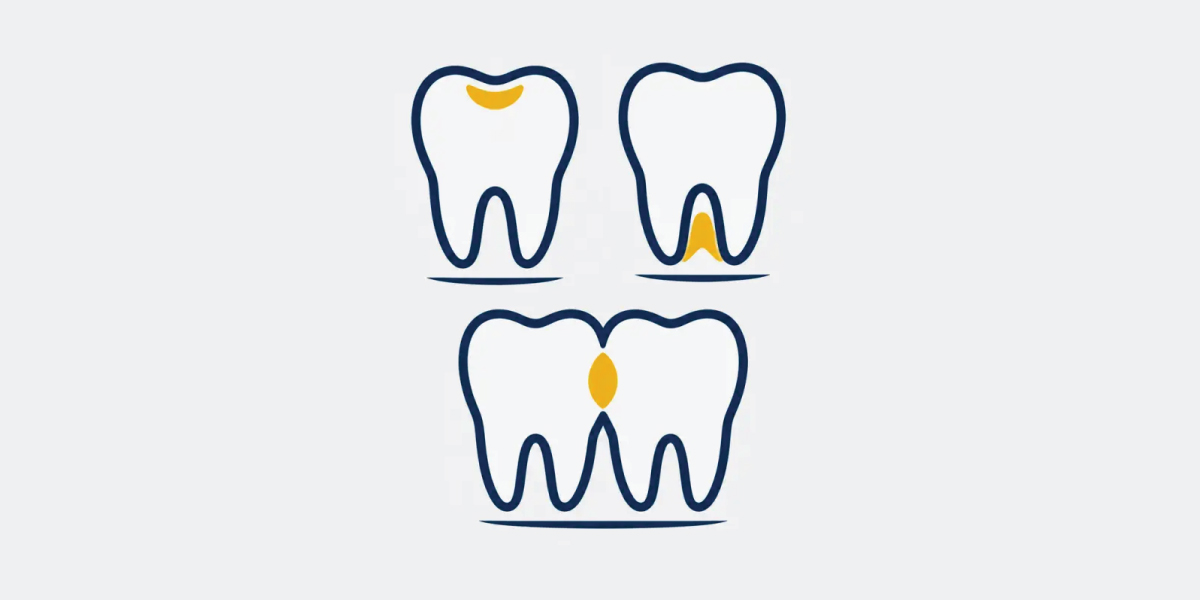
Yes. We often describe cavities by where they form: in pits and grooves, on a smooth surface, along an exposed root, or beside an existing restoration. The name helps us explain the problem, but your treatment depends on the actual tooth.
Which cavities are hardest to see?
Decay between teeth and beneath or beside existing restorations may be difficult to see without appropriate dental X-rays.
Can every cavity be treated with a filling?
No. Many small or moderate cavities can be repaired with a filling, but a tooth that has lost more structure may need a crown or another approach. We will show you why one option is being recommended.
Can early decay be reversed?
Mineral loss may sometimes be arrested or reversed before a physical hole forms. Once tooth structure is lost, a restoration is generally needed.
Does cavity location change the symptoms?
It can. Root decay may be sensitive, decay between teeth may trap food or shred floss, and early decay in any location may cause no symptoms.
The sections below explain what each cavity type means, how we look for it, and how treatment is matched to the individual tooth rather than to a label alone.
The Same Disease Can Appear in Different Places
Tooth decay begins when bacteria in dental plaque use sugars and starches from foods and drinks. The acids produced during that process remove minerals from enamel or an exposed root surface. Saliva and fluoride support repair, but repeated acid exposure can eventually create permanent damage.
The National Institute of Dental and Craniofacial Research explains that early mineral loss may sometimes be stopped or reversed before a cavity forms. Once enamel or root structure has broken down into a true hole, the lost structure does not grow back. That distinction is more important than the color of a spot or whether the tooth currently hurts.
Four Common Cavity Locations
Pit-and-Fissure Cavities
Back teeth have natural hills, pits, and grooves that help grind food. Some grooves are so narrow that even careful toothbrush bristles cannot reach their full depth. That does not mean a patient has brushed poorly. It means the shape of the tooth can create a hiding place for plaque. Sealants can protect selected cavity-prone grooves before decay begins.
Smooth-Surface and Between-Teeth Cavities
Smooth-surface decay develops on flatter enamel. When it forms where two teeth touch, it may be impossible to see in the mirror and easy to miss during a visual examination alone. Flossing helps disrupt plaque in this area, and bitewing X-rays may reveal a change while the tooth is still comfortable and the repair can remain more conservative.
Root-Surface Cavities
When gums recede, part of the root can become exposed. Roots do not have the same enamel covering as the crown of a tooth, so they are more vulnerable to decay and may also feel sensitive. Dry mouth, limited dexterity, frequent snacking, and difficulty cleaning near the gumline can raise the risk. We tailor prevention to the reason the root is vulnerable rather than simply telling a patient to brush harder.
Recurrent Decay
New decay can form at the edge of an older filling or crown. That does not automatically mean the restoration was defective or that a patient did something wrong. Teeth and materials experience years of chewing, and margins can wear, chip, or become harder to clean over time. Regular comparisons help us notice those changes before a large portion of the tooth is involved.
How Dentists Determine the Type and Depth
A cavity evaluation combines the patient’s symptoms, a clinical examination, previous records, and X-rays when appropriate. The dentist looks at the tooth surface, contacts, existing restorations, gumline, bite, and the amount of healthy structure that remains. A dark groove can be stain, while a normal-looking contact area may hide decay, so appearance alone is not a diagnosis.
Our digital dental X-rays page explains why images can be useful for areas that cannot be viewed directly. Their type and timing are based on individual need rather than a single schedule for everyone. Cold testing, biting pressure, or other checks may be used when symptoms could also come from a crack, gum recession, or a failing restoration.
Treatment Depends More on Stage Than Label
Early mineral loss without a cavity may be managed with fluoride, improved plaque control, diet changes, saliva support, and monitoring. A small or moderate cavity is commonly treated by removing damaged tissue and rebuilding the area with a filling. Learn more about conservative options on our dental fillings page.
If decay has undermined a large portion of the tooth, another filling may not provide dependable support. A crown can surround a weakened tooth and distribute chewing force more broadly. Decay that has reached the pulp may require root canal treatment if the tooth can be saved. A tooth that cannot be predictably restored may need removal and a separate discussion about replacement. Recommendations depend on the actual tooth, not merely the cavity’s category.
Prevention Should Match the Location of Risk
Brush twice daily with fluoride toothpaste and clean between teeth every day using floss or another device suited to your spacing and dexterity. Limit frequent sipping or grazing on sugary and starchy foods, because the number of acid exposures matters. Water between meals and attention to dry mouth can also help.
Someone with deep molar grooves may benefit from sealants. A patient with recession or dry mouth may need extra fluoride, saliva support, or a different way to clean along the roots. A person with several older restorations may need closer monitoring at their margins. We want prevention advice to fit your mouth and your daily life, because a plan you can comfortably follow is more useful than a generic list of perfect habits.
At Scanlan Family Dentistry, formerly known as Galligan Family Dentistry, we help patients in North Raleigh understand what we are seeing before we discuss treatment. The cavity category is useful, but the conversation should always come back to your tooth, your comfort, and the most conservative dependable option available.
Have a Suspicious Area Checked
If you notice sensitivity, food trapping, a rough spot, or another change that has you wondering about a cavity, call our North Raleigh office. We will take a careful look and explain what the tooth needs without making you feel rushed.